How Regular Exercise Can Support Your Eye Health

Guest post by Joe Adelman from Dirty Water Fitness

Why a strength gym is talking about eye health

We’re a strength gym, not an eye clinic. No one here is going to tell you a squat rack can diagnose or fix an eye condition, and honestly, if someone does say that, you should walk out.

But we do spend a lot of time coaching people on habits, and habits keeps your heart, lungs, blood sugar, and joints in decent shape for the long haul. And as it turns out, your eyes aren’t off living in a separate universe.

Exercise changes a lot at once: blood pressure, blood sugar, and how well your heart and lungs work. Those “body” stats are connected to how well the retina and optic nerve get what they need. Research on exercise and eye health keeps circling back to circulation and blood flow, which makes sense once you think about it.

So what does regular exercise really have to do with your eyes? More than you might expect.

The eye-body connection starts with circulation

Your eyes aren’t just sitting there. They’re constantly using oxygen and nutrients, and the retina is especially hungry. It burns through a lot of energy just to keep your vision sharp.   

Research suggests physical activity can influence vascular function and blood-flow regulation, which is a careful way of saying that movement may help support the tiny vessels that feed the retina and optic nerve. There are several possible pathways, but science is still connecting the dots. That’s why we care about cardiovascular fitness even when someone’s main goal is getting stronger.

The American Academy of Ophthalmology has also highlighted research linking regular physical activity with lower risks of certain eye diseases. That’s an encouraging link, but we should keep the language honest: exercise supports overall health and may support eye health. That doesn’t mean it’s a guaranteed way to prevent eye disease. 

Exercise and glaucoma: what the research suggests

Glaucoma is a group of eye diseases that damage the optic nerve, the cable that carries visual information from the eye to the brain. Eye pressure usually plays a role, but it’s not the whole story. Some people with glaucoma have high pressure in the eyes, but others have pressure that looks completely normal and still develop the disease. 

Research shows that aerobic exercise can lower “intraocular” (inside-the-eyes) pressure in the short term. One 2024 systematic review found that eye pressure drops right after exercise in people with glaucoma. But when researchers looked at longer-term training programs, the results were all over the place, nothing consistent. So we can’t say regular exercise permanently resets your eye pressure. 

The Glaucoma Research Foundation also points out that the effect depends on the type and intensity of exercise. For us as coaches, the takeaway is simple: more isn’t always better.

Some lifts, especially if you’re holding your breath and straining, can temporarily bump up eye pressure. That doesn’t mean you should skip lifting if you have glaucoma, though! It means the program has to match the person. If your eye pressure runs high or you’ve been diagnosed, check with your eye doctor first. Exercise also can’t replace glaucoma treatment or regular eye exams.

The National Eye Institute reminds us that glaucoma often moves quietly, no symptoms until damage adds up. That’s why it’s important to stay on top of those eye exams. You might lift weights, but medicine still does the “heavy lifting”.

woman lifting weights

Diabetic retinopathy: the blood sugar link

When it comes to diabetes, the exercise-eye connection gets very real very quickly.

Diabetic retinopathy is what happens when high blood sugar damages the tiny blood vessels in the retina. Over time, those vessels can leak or get blocked. In later stages, the eye may try to grow new ones, and those tend to be fragile and cause more trouble than they fix.   

Exercise makes your body more sensitive to insulin, which keeps blood sugar steadier. If you live with diabetes, that’s a huge part of managing the condition.

The American Diabetes Association puts movement right up there with nutrition and medication, and the National Eye Institute agrees. Regular exercise can help manage diabetes and lower the risk of diabetic retinopathy. It would be an overstatement to say that exercise prevents diabetic retinopathy, but exercise helps manage one of the biggest risk factors for diabetic eye disease.

And if you have diabetes, don’t rely on how your vision feels, because early diabetic retinopathy usually doesn’t feel like anything. You might not notice a problem until your vision starts changing. That’s why regular eye exams are still the best way to catch it early. 

Blood pressure and diabetes: two threats to vision

The eyes are part of your cardiovascular and metabolic system. The tiny blood vessels in the back of the eye don’t handle high blood pressure or high blood sugar well. The CDC says that high blood sugar, high blood pressure, and high cholesterol raise the risk list for diabetic retinopathy. And National Eye Institute adds another layer: if you have both diabetes and high blood pressure, your risk climbs even higher. 

We’ve seen this play out in the gym. A member starts training consistently, and a few months later, their doctor notices their blood pressure is down or their glucose numbers look better. They didn’t really try to make that happen, but it just happens naturally when they develop a movement routine.

The American Heart Association suggests 150 minutes of moderate cardio or 75 minutes of vigorous cardio per week, plus two days of strength work. That’s a good long-term target. If that feels like too much, begin smaller. Two walks, two strength sessions, and something you actually enjoy will beat a crash plan you quit in three weeks. Consistency for the win! 

Age-related vision decline: staying active over time

As we get older, the goal changes. It’s not about records; it’s about keeping the things that let you live your life. Like driving, reading, recognizing a friend across the street.

Age-related macular degeneration, or AMD, affects the macula, the part of the retina that handles sharp central vision. And AMD is one of the major eye conditions tied to getting older. The American Academy of Ophthalmology has discussed research connecting physical activity with eye health and age-related disease. 

The research here is promising. Some studies suggest a link between higher physical activity levels and lower AMD risk.  One 2025 Mendelian randomization study looked at genetically predicted physical activity and AMD risk, while a 2026 meta-analysis of cohort studies also examined the relationship between physical activity and AMD. That’s useful evidence, but it doesn’t translate into a simple prescription like “exercise this many minutes and you’ll prevent AMD.” 

When it comes to strength training, we care more about what you’ll still be doing at 40, 50, 60, and beyond than what you can survive for six weeks at 30. A mix of walking, cycling, swimming, strength training, whatever you’ll actually stick with, beats the hardest workout every time. There’s no prize for suffering. 
a man getting an eye exam

Applying the research to your strength training routine

Research is all fine and good, but how do you apply it to your life?

  1. Start small. All you need is one or two strength training sessions per week. Each one should be a “full body” day – that way you don’t have to lift 4-5 times a week to hit all the muscle groups.
  2. Squeeze in a manageable amount of cardio. Two 30-minute walks per week is totally fine to start.
  3. Have a plan. Most people don’t know where to start with lifting weights. If that’s you, then hire a personal trainer. If you’re in the Boston/Cambridge area, hit up our gym in Cambridge, MA. We hook you up with a personalized training plan and emphasize sustainable fitness habits.

Bottom line: Getting regular movement that supports your heart, blood pressure, and blood sugar, and all of that matters for keeping your vision strong as you age.

You don’t need an extreme program. Start with something realistic to build strength and get your heart rate up regularly. Don’t skip out on your eye care appointments, though!

One last thing: this post is for education, not medical advice. If you have an eye condition or any concerns, run it past your eye doctor before you change your workout routine. 

Sources:

American Academy of Ophthalmology — Exercise and Eye Health

National Eye Institute — Glaucoma

National Eye Institute — Diabetic Retinopathy

CDC — Diabetes and Vision Loss

Glaucoma Research Foundation — Can Exercise Lower Eye Pressure?

American Heart Association — Physical Activity Recommendations

American Diabetes Association — Fitness

Zhang et al. 2024 — Exercise and Eye Health Review

González-Devesa et al. 2024 — Exercise and Intraocular Pressure

Zhou et al. 2025 — Physical Activity and AMD

Aune et al. 2026 — Physical Activity, Cataract and AMD Meta-analysis

Signs Your Glasses Prescription Might Be Wrong

New glasses should simplify things and not give you headaches, haze, or crazy distortion. If you continue to have headaches, blurriness, or odd distortions after adjusting, your prescription could be off.

This is how you can spot the red flags—and when to call your eye doctor.

Adjustment Period for Glasses Prescriptions

Do you have new specs? If your vision appears somewhat strange at first, don’t worry. You should expect to adapt—your eyes and brain adjust to the new lenses. It’s like wearing new shoes; it will feel wonky before it starts to feel normal.

Most people adjust in a few days to two weeks. New wearers or those with significant prescription changes may take closer to two weeks. If you wear progressive or bifocal lenses, stop using them for up to six weeks. Your brain needs time to adjust to looking at different distances.

Why does this happen? More powerful prescriptions, fresh lens shapes, or even changes in frame shape can leave you dazed for a bit. You may feel headaches, dizziness, or a “fishbowl” effect. This happens when the edges of your vision curve, like looking through a funhouse mirror. Unbalanced depth perception may cause you to stumble around stairs for a day or so.

To adapt to them, wear them without interruption—even if you want to switch back to your old ones. The more you wear them, the quicker your eyes adapt to them. Just don’t attempt to grit it out through awful pain.

If headaches and distortion persist for over a week, or you still squint after two weeks, visit your eye doctor. Your prescription might need adjustment, or your frames might not fit as intended.

A slight uneasiness is natural. But if things don’t calm down, believe your instincts—it might be more than an adjustment period.

Key Signs Your Glasses Prescription Might Be Wrong

New glasses should not complicate life but rather clarify it. We understand that your lenses may not consistently deliver their best performance. Still, our goal is to ensure that your glasses enhance your vision and make life easier.

Here’s how to tell when your prescription is incorrect—and when to contact your eye doctor. Spotting and fixing a wrong prescription can be freeing. It helps you take charge of your vision health.

1.   Blurry Vision That Won’t Stop

Have you had blurry vision for an entire day or two? That’s normal. After two weeks, is your eyesight still blurry? Not very much. Something is wrong if street signs, lettering, or faces remain blurry even with glasses on. This could mean your prescription is too weak or too strong. It also indicates that someone made the lenses with errors.

You can do a fast test by covering one eye. If objects appear clear in one eye but foggy in the other, your prescription may be uneven. It’s time to recheck!

2.   Headaches that outlast their welcome

Occasional headaches throughout the adjustment period? Meh. Daily headaches that give you a tight grip around your temples? A big red flag. Wrong medications can make your eyes strain a lot. This strain leads to pounding headaches, especially after you drive, read, or spend time on screens.

If taking painkillers has become your new routine, it’s most likely because of your spectacles.

3.   Eye Strain Feels Like a Marathon

You should not feel tired in your eyes after wearing glasses. Your prescription might be wrong if you scratch your eyes, squint often, or feel as if you have run a marathon with your eyes. This usually happens when your lenses don’t fit your vision needs. For example, using reading glasses for distance vision or vice versa can cause issues.

4.   Dizziness, or “Drunk Vision”

Feeling wobbly or unbalanced? Do you experience vertigo when you wear glasses? Wrong prescriptions can change how you see depth, making the world look tilted or shaky, like in funhouse mirrors. This is especially prevalent with progressives or bifocals, as the lens zones may not align with your eyes.

5.   Double Vision or Funky Distortions

Seeing a double of everything? Or do the edges appear twisted as if you’re looking through a fishbowl? These are not magic tricks; your glasses are waving a white flag. Double vision or distorted lines usually result from incorrect lens power or misaligned pupils with the lens centers.

6.   Squinting like there’s no tomorrow

Are you squinting from time to time? Normal. Are you squinting as if you are judging a pie contest? Not excellent. If you have to squeeze your eyes shut to focus, your glasses are too weak or designed for someone else’s eyes.

a man sitting in front of a laptop holding glasses in one hand and rubbing his eyes with the other hand, frowning

7.   Light Sensitivity: That’s harsher than reality television

Are new glasses making sunshine seem like a laser beam? Do the workplace lights become blinding all at once? Some glare is usual with anti-reflective coatings. Yet, if you have severe light sensitivity, your prescription might be wrong or need a lens change.

8.   One Eye Gets Left Out

Close one eye. Now, the other. The prescription may be unequal if one eye sees well while the other remains in fog mode. This occurs if one lens is sharper than necessary, confusing your brain and requiring one eye to do all the heavy lifting.

When to Raise the Alarm?

Do not ignore:

  • Symptoms that linger for more than two weeks.
  • Nausea or vertigo can make ordinary chores unsafe, such as driving.
  • Sudden visual changes, such as black patches or flashes.

Your glasses ought to be like helpful companions, not foes. If they’re causing more issues than they’re solving, follow your instincts. Schedule a follow-up with your eye doctor, who will check your prescription, adjust the fit, and look for problems like warped lenses.

Remember, professional help is always available to ensure your vision is at its best.

Common Causes of Incorrect Glasses Prescriptions

Do your new glasses still feel “off” after the adjustment period? Sometimes, the problem isn’t your eyes but the prescription itself.

Here’s an explanation of why your glasses may not work (and how to fix them).

1.   Oops! Occasions During the Eye Examination

Eye examinations are not infallible. Suppose you feel fatigued, hurried, or are squinting in a dark room during your test. Your responses about which lens seems “clearer” may have been incorrect. Even minor errors like a misspelling in your prescription or misunderstanding the chart can result in lenses that do not fit your eyes.

Pro tip: Always schedule eye tests when you are well-rested. Also, speak up if you are unclear about your options during the test!

2.   Your eyes changed. Again

Vision is not static. Children’s eyes change as they grow. Adults often deal with age-related issues. One common problem is presbyopia. This means they need to hold books farther away to read. Also, health problems like diabetes or high blood pressure can impact vision. Even extensive screen time can be hard on your eyes, making your previous prescription seem obsolete.

The solution is to schedule checks every 1 to 2 years. Your eye doctor can detect abnormalities at an early stage.

3.   Lens Lab Mix-ups

Imagine buying a latte and receiving herbal tea. This happens when labs make lenses with the wrong power, place them off-center, or use poor materials. Progressive or bifocal lenses can be tricky. If the “zones” for near and far vision aren’t aligned well, it can feel like a maze.

Red flags include blurry edges, impaired vision, and persistent headaches.

4.   Frames That Attack Your Face

Glasses that slide, pinch, or misalign can destroy even the best prescription. Lenses should have a precise alignment with your pupils. When your frames are too broad, tiny, or angled, they distort your view as if you were looking through a funhouse mirror.

A quick check will determine if your eyes align with the center of each lens. If not, see an optician for adjustments.

5.   Hidden Eye Surprises

Blurred vision isn’t always caused by a prescription—it might be a sneaky eye ailment. Cataracts, dry eye, and keratoconus (cornea thinning) can all resemble prescription difficulties. Even previous eye injuries or operations may impact how glasses function for you.

Do not disregard sudden changes in eyesight or discomfort. These need immediate professional treatment.

a hand holding up a pair of prescription glasses in front of an eye chart with letters on it

6.   Online Orders Went Wrong

Are you looking to order glasses online? It is dangerous. If you mismeasure pupillary distance or fit the lenses in a way that does not match your needs, your glasses may feel like someone else’s.

Play it safe and get your first pair from a reputable facility. Use internet stores just for backups or minor medications.

The majority of prescription mistakes are fixable. If your glasses still cause trouble after 2 weeks, don’t wait. Schedule a follow-up appointment. Your eye doctor can change your prescription, look for hidden problems, and adjust your glasses.

What to Consider If You Notice a Problem?

If your glasses feel goofy, intervene without delay.

  • Track any symptoms, such as headaches or blurred vision, and compare how things seem with and without your glasses.
  • Check your prescription. Look for mistakes on the slip (for example, inverted digits for astigmatism).
  • Visit your eye doctor. Bring your new and old glasses to your visit; they will detect problems immediately.
  • Know your rights. According to the FTC, you may get your prescription for free following a checkup with no sales pressure.

Prevention Tips: Keep Your Glasses Game Strong

Don’t allow a bad prescription to destroy your mood. Here’s how to avoid glasses trouble before it happens:

  • Book Checkups Like Clockwork: Get your eyes checked every 1-2 years (or sooner if things go hazy). Vision changes appear over time, like unread texts; regular checkups identify issues at an early stage.
  • Speak the Truth During Exams: Tired? Stressed? Tell your eye doctor. Even “small” things like migraines or squinting at Netflix are essential. Honesty equals more precise prescriptions.
  • Ditch Screens Before Appointments: Avoid a four-hour TikTok marathon before your exam. Screen strain might deceive your eyes into providing incorrect responses.
  • Choose pros with Perks: Buy glasses from stores with good return policies. If a mistake occurs, reputable shops often redo the lenses at no charge.
  • No Sharing, No Glare: What about your BFF’s glasses? They have cute frames but a horrible concept. Their prescription differs from yours. Also, put on UV-blocking sunglasses—sun damage is real.
  • Relax Before Your Exam: Stress alters outcomes. Take deep breaths, forgo the triple espresso, and arrive with a sense of calm.
  • Frame Fit Matters: Are your glasses sliding down? Tight behind the ears? Request modifications. Do not use DIY hacks; lenses must line up with your pupils.
  • Screen Breaks. Save Eyes: Follow the 20-20-20 rule: every 20 minutes, focus on something 20 feet away for 20 seconds. Your eyes will thank you.
  • Online orders? Double-check: If purchasing online, triple-check your prescription numbers. One misspelling equals hazy doom.
  • Speak Up If Something Feels Off: Are new glasses creating headaches after a week? Don’t suffer in silence. Demand a recheck; it’s your right.

Conclusion

Don’t dismiss faulty eyesight or everyday headaches; wearing glasses shouldn’t be a chore. Trust your instincts, schedule a checkup, and regain your clear vision. Life is too brief to have “meh” vision.

What to Do If Your Vision Suddenly Changes

You’re doing okay one minute, and then something isn’t quite right. Maybe things are blurry suddenly. Maybe there’s some weird flashing light off to one side of your vision. Or maybe it’s worse—you can’t see out of one eye at all.

I’m not trying to scare you. But if your vision changes out of the blue, you need to take it seriously. Eyes don’t just play around like that for no reason.

Now, not every sudden change means you’re in some kind of immediate danger. Sometimes it’s something simple like dry eyes, migraines, or even needing a new glasses prescription. But **sometimes**, it can be a warning sign of something a lot bigger—like a retinal detachment, a stroke, or nerve problems.

The tricky part is, when it’s happening to you, you don’t always know which is which. So, I put this guide together. I want you to be certain about what to do, what to look out for, and when to get help. Let’s do this step by step together.

Recognizing Sudden Changes in Vision

First things first: what do we even mean by a “sudden” vision change?

We’re not talking about your prescription getting a little worse over six months. That’s just normal aging stuff. Sudden means.well, **sudden**. As in, one minute you’re fine, and the next, something’s wrong.

Here are a few examples to keep in mind:

  • You wake up and everything is blurry, even after blinking and rubbing your eyes.
  • You notice flashing lights, sparkles, or zig-zag lines in your field of vision.
  • You lose part of your field of vision—like a curtain fell over one eye.
  • Things look warped or wavy, like you are viewing them through a wavy piece of glass.
  • Your vision doubles when it was single before.
  • You see a sudden shower of floaters (those small specks or wavy lines that drift across your field of vision).

All of these are warning signs, even if they seem insignificant at first.

Here’s the thing people sometimes get wrong:

They presume if the symptom is not painful, it cannot be urgent. That is not so with your eyes. Pain is not the only signal that something important is happening.

When your vision shifts dramatically and suddenly, your body is waving a big flag in your face: “Pay attention!” Even if you want to wait it out and hope that it clears up, don’t. Vision is too precious to risk.

In the next section, I’ll walk you through the very first thing you need to do when something like this happens. Because your reaction is just as crucial as the symptoms themselves.

a man frowning and rubbing his temple as if he has a headache

First Step — Stay Calm, Then Assess

It’s normal to panic when something scary happens to your eyes. But first things first, breathe. Panic makes you think poorly, and right now you don’t need foggy thinking.

Take a minute to try and figure out what’s actually happening. Ask yourself:

– Is it in one or both eyes?

– Did it occur suddenly or did it build up over a couple of minutes?

– Are there any other symptoms present, like a headache, dizziness, or weakness?

– Is there any pain at all?

– Has something like this ever happened in your past?

Get it down on paper if you can. It doesn’t have to be nice. Even some rough scribbles in your phone’s note program will help you out later when you talk to the doctor. In an emergency, certain details allow them to respond faster and make the right decisions.

If you discover you can’t see out of an eye, or you’re experiencing flashes and a cascade of floaters, that’s the time to not hope it will improve on its own. Same with any sudden, severe vision loss, even if there isn’t any pain. These are not “wait and see” situations.

If it’s an odd blur that disappears after you blink or you slept strangely on your face, that’s one thing. But anything more than a few minutes? Don’t guess. Don’t spend two hours Googling. Go to step two.

Seek Help Quickly — When to Call and When to Go

Now that you’ve had a second to assess, next is action. And according to what you’re going through, there’s a kind of assistance to dial.

If you suddenly have loss of vision, flashing lights, big new floater, double vision, or a dark shadow that doesn’t go away, you must be seen right away. Not next week. Now.

Here’s a quick rundown:

  • If it’s during business hours, call your usual eye doctor and tell them that it’s an emergency. Don’t downplay it. Say the words “sudden vision change.” They should see you that day or refer you to someone who can.
  • If after hours, or your optometrist cannot be reached immediately, go to emergency room or urgent care. Let them know it’s your vision. They’ll take it seriously and either have you scanned there or refer you to an on-call eye specialist.
  • If you’re also showing other symptoms like weakness, trouble with speech or walking, you need to call 911. Right away. Those can be symptoms of a stroke, and vision abnormalities could be included.

A lot of people wait out of fear of wasting a doctor’s time. Don’t be that individual. Your sight is worth complaining about. Doctors would prefer to tell you “you’re fine” than watch you become blind because you waited too long.

What to Expect at the Doctor’s Office

So you reached the eye doctor or emergency room. Good. Here is what typically occurs next.

First, they’ll ask you lots of questions — when did your symptoms start, what did you notice, how has it changed, what else is going on in your body. That little quiz you just took? You’ll need it now.

Second, they’ll probably do a basic eye test, checking each eye individually. They’ll probably shine lights into your eyes and ask you to follow a target or move your eyes around in different directions.

In most, but not all, they’ll have to widen your eyes. That’s when they drop something in your eyes that causes your eyes to open as wide as possible, so they can examine your retina and the back of your eye. The drops could blur your vision for a couple of hours later on, and you’ll be sensitive to light, so it’s best to wear sunglasses and maybe a friend to bring you home.

Depending on what they find, they might:

  • Diagnose it on the spot (like a tear in your retina, macular edema, or optic neuritis)
  • Send you off for further testing like an OCT scan (a fancy photo of the back of your eye)
  • Send you to a specialist, such as a retinal specialist or a neurologist
  • Start treatment immediately, especially if they find something serious

If they don’t find anything right away, don’t feel silly for going in. Eye problems sometimes clear up in a matter of minutes, and simply getting you diagnosed is the most you can do.

Aftercare and Follow-Up

Getting through the initial doctor visit is a big relief, but you’re not done yet. Now’s the time to keep a close eye (no pun intended) on how things are going.

If your physician gave you treatment — like laser treatment for a tear in the retina, medication for inflammation, or blood pressure or diabetes instructions — make sure to actually follow up. I know it sounds ridiculous, but you’d be amazed at how many people feel good for a day and say, “Ah, I’m fine,” and miss their follow-ups.”.

Vision issues are most often problematic. You might believe things are getting better even when there is still a threat. Recovery does not always match up with how you feel right away.

You’ll also want to keep an eye out for any new or worsening symptoms, even if you were cleared in the first place. Some problems come on slowly or come back again. If your vision blurs again, if you see new flashes or floaters, or if something just doesn’t feel “right,” call your doctor. They’d rather you call too often than not often enough.

And this is something that doesn’t happen enough: advocate for yourself. If you feel hurried, if something doesn’t make sense when it’s explained, or if you remain anxious after seeing a doctor, ask questions. It’s not being dramatic. It’s looking out for yourself.

Finally, be kind to yourself. It’s scary to lose your eyesight. Even if it is something minor, it’s still your eyesight — your window to the world. It’s okay to be shaken up. Give yourself time to recover emotionally too.

a woman putting her arm on the shoulder of another woman in comfort

Coping Emotionally with Vision Changes

We talk a great deal about the medical side of sudden vision loss but little about the emotional gut punch that goes with it.

Even if your doctor tells you, “You’re going to be fine,” that first shock can rattle you. Your eyes are how you read, drive, recognize faces, and enjoy the outdoors. When something endangers that, it’s completely reasonable to be afraid, upset, or even angry.

Give yourself permission to feel them. You’re not weak. You’re not exaggerating. Vision changes, even fleeting ones, can trick your sense of independence.

Something that works is taking little, manageable actions to feel even slightly more in charge. Have questions written down ahead of follow-up appointments. Have a friend or relative attend with you for company. Discuss practical aids, e.g., extra lighting around the house or short-term magnifying equipment if needed. Little wins add up.

And if you’re really having a problem, it’s not a bad idea to tell your doctor. They can hopefully connect you with support services, like vision rehab programs or counseling agencies. You don’t have to be alone.

Preventing Future Vision Emergencies

After the dust settles, the best you can do is try to minimize your chances of having another vision scare in the future.

Here’s the truth: not everything that comes about suddenly can be prevented. Some eye conditions, for example retinal detachment, can strike at any moment, especially if you’re very short-sighted or predisposed to it by your family history.

But the majority of the leading causes of blindness — the diabetes damage, the hypertension complications, some strokes — can be caught early, or even prevented in the first place by regular checks and good overall health habits.

Here are some things that can be the game-changer:

  • Have yearly eye tests, even if your vision seems to be fine.
  • Keep track of blood pressure, blood sugar, and cholesterol.
  • Take steps to protect your eyes from damage, especially during sports or household projects.
  • Keep an eye out for family history and share it with your eye doctor.
  • Pay attention to new or changing vision symptoms and never “wait it out.”

Proactiveness is not the same as living in terror. It simply means getting yourself in the optimal position to get something early on when it’s most treatable.

And really, that’s sort of the whole attitude behind Medi-Type. You don’t have to be a medical genius. You just have to recognize when to hold up your hand and call in help — and to have faith that it’s worth it to do so.

Closing Thoughts

If you remember one thing from all of this, let it be this: rapid changes in your vision are never something that you “wait and see” about. Even if it’s only a harmless floater or dry eye, it’s better to have it looked at. Timely action may be the difference between an inconvenience and total vision loss.

Be calm. Monitor for details. Seek help promptly. Ensue follow-through care. Those actions can guard one of the most precious possessions you own — your vision for the people and places that matter most to you.

And remember, you’re not alone in figuring this out. That’s why Medi-Type is here — to help regular folks feel a little more informed and a little less panicked when health stuff comes up.

Thanks for dropping by. Hope you enjoyed it. If so, stay tuned — I’m posting more practical, plain-English lessons every month. You might also take a look at some of the other posts, like “5 Questions to Ask Your Eye Doctor” or “How Vision Can Signal Other Health Problems.” They could be helpful too.

Stay healthy, eye-wise—and wise otherwise.

—Marianne

How Vision Can Signal Other Health Problems

Most people think about the eye doctor once every year, maybe, if they happen to remember. And usually, it is about getting new glasses, or figuring out why the world is a little blurrier than it was in the past. I get it. I used to think the same way.

But what I’ve learned — after years of reading medical reports and listening in on real doctor-patient conversations — is that your eyes can reveal the earliest warning signs of a much bigger health problem. Sometimes before you’re even feeling sick. Sometimes before a blood test would even show it.

I know it doesn’t make sense. You wouldn’t think a blurry spot or a little pressure in the eyes would announce something as significant as high blood pressure, diabetes, or even a neurological issue. But the truth is, your eyes are small messengers, and if you listen, they’ll tell you a lot about what’s going on in the rest of your body.

This is not a matter of attempting to make you paranoid each time you get an eyelash in your eye. This is a matter of staying alert and noticing when something does not feel correct. This is a matter of discovering things early, when they are easier to treat.

So let us talk about why your eyes are such a valuable window to your health.

Why Your Eyes Are a Window to Your Health

You’ve probably heard that saying, “The eyes are the window to the soul.” Well, turns out they’re the window to your arteries, your nerves, and your overall health too.

Here’s the thing most people don’t realize: your eyes are one of the only places in your entire body where a doctor can look directly at blood vessels, nerves, and connective tissue without needing surgery. When your eye doctor looks into the back of your eye during an exam — the part called the retina — they can see small arteries, veins, and the optic nerve. That’s a direct glimpse at your body’s wiring and plumbing.

If those blood vessels seem twisted, narrowed, leaky, or blocked, it can be a clue to something bigger going on somewhere else. High blood pressure, for instance, usually shows up as extremely subtle changes in the blood vessels in the eye. Diabetes can show up as tiny spots of bleeding or swelling in the retina long before you even notice anything wrong with your vision.

It’s not just the blood vessels, either. The optic nerve — the cable that carries information from your eyes to your brain — can swell if there’s pressure within your skull. That can be caused by something as serious as a brain tumor, a bleed, or an infection of some sort.

Even subtle changes, like mild inflammation in the eye, can sometimes suggest autoimmune conditions. I once read a report where a woman had red, dry eyes, and it was one of the first presentations of rheumatoid arthritis setting in.

So when your eye doctor is flashing that big light and saying, “Look straight ahead,” they’re not always checking for glasses prescriptions. They’re checking your whole body’s wiring and fluid system. It’s one of the only non-invasive windows into your vascular and nerve health that modern medicine has.

Now, having an odd symptom doesn’t always mean that you have a large disease. I don’t need you running around in a frenzy every time your eye gets slightly dry. But if something’s different and it doesn’t clear up within a day or so? If your vision blurs suddenly or you’re noticing flashing lights? That’s the time to heed what your body (and your eyes) might be trying to tell you.

Then, we will get into some of the specific vision symptoms that you should not ignore.

closeup image of a blue eye

Vision Symptoms You Shouldn’t Ignore

Alright, now let’s discuss the things that should perk your ears a bit. These are the kinds of changes in vision that, in my view, are never something to wait and see about.

You don’t have to go crazy at the first sign of some dryness or eye strain after staring at a computer for hours. But at the first sign of any of these, you’d better call up the eye doctor. Even if it is nothing, it is better to check things out early rather than be sorry later.

1. Sudden Blurry Vision

If your eyes suddenly become fuzzy, as if someone rubbed petroleum jelly on your glasses, that is not to be dismissed. Particularly if it occurs in just one eye.

Sometimes, fuzzy vision is just simply something simple like dry eyes. But sometimes it can also be the first symptom of something far more dangerous like a retinal detachment, an eye stroke, or even an untreated diabetes. In some cases, it’s how people learn they have blood pressure that is life-threateningly high.

I don’t know how often I dictated a doctor’s note in which a patient said, “I thought it would clear up on its own.” If it’s something serious, you want it to be diagnosed immediately, not weeks after you’ve been wondering.

2. Flashes of Light or New Floaters

Seeing fleeting flashes of light in your eye — like small camera flashes that aren’t really there — is a sign. So is noticing a lot of new floaters (those small squiggly lines or dots that drift through the field of vision when you move your eyes).

Now, floaters naturally happen with age. They’re part of the inside gel of your eye transforming over time. But a sudden *shower* of flashes and floaters can mean that the retina, the back wall of your eye, is ripping or peeling off.

That’s an eye emergency. You can lose your vision permanently if it’s not caught soon enough. So if you ever see a new onset of floaters or flashes, call an eye doctor the same day. No delay.

3. Eye Pain or Pressure

Eye pain or pressure in the eyes isn’t normal. It may mean several things, some more serious than others.

It may be simply a plain old infection, like pink eye. It can be acute angle-closure glaucoma, but then the pressure inside the eye comes on quickly and jeopardizes your vision. It can cause headache, nausea, blurry vision, and rainbow-colored halos of light.

It’s misleading since most individuals just think they’re experiencing a migraine. That is why it’s important to get it checked out, especially if the eye itself hurts or vision gets cloudy with it.

4. Loss of Side Vision

The other red flag is losing your peripheral (side) vision. Occasionally, people don’t even realize it at first because it develops gradually. They simply begin bumping into door frames or getting into difficulty seeing cars coming in from the side.

Loss of peripheral vision can occur for a multitude of reasons, but glaucoma is one of the major ones. It slowly damages the optic nerve and steals your side vision first.

Early detection of glaucoma can be a huge help. There are things that can slow the process, but once the vision is gone, it’s gone for good. That’s why yearly eye exams — not just buying reading glasses at the pharmacy — are the way to go.

5. Double Vision

If you start seeing two of everything (and you haven’t been partying), that’s something to take seriously.

Double vision might indicate a problem with muscles that move your eyes, or possibly a nerve problem. At times it’s the initial sign of conditions like multiple sclerosis, a mini-stroke, or a nerve palsy due to diabetes.

It isn’t always scary — it also has innocent causes — but isn’t something you’d want to try to self-diagnose with Dr. Google. Get it checked out properly.

a woman who has taken off her eyeglasses and is rubbing the bridge of her nose as if she has a headache

Health Conditions Often Spotted First Through Eye Exams

Your eyes aren’t windows to the soul only — they’re windows to your body. Eye doctors can occasionally detect gigantic health issues before you realize anything else is wrong. Here are some of the biggies.

Diabetes

One of the most common things that eye doctors diagnose early is diabetes. When blood sugar is high for a long time, it starts to affect the tiny blood vessels in your eyes. This is diabetic retinopathy.

Sometimes, people find out they have diabetes when their eye doctor sees bleeding or swelling in the back of their eye during a routine eye exam. You may be perfectly healthy — no crazy thirst, no debilitating fatigue — and still have early signs in your eyes.

Early detection of diabetes does make a difference. It provides you with a greater opportunity to manage your blood sugar and avoid permanent damage not only to your eyes, but to your heart, kidneys, and nerves as well.

High Blood Pressure

Another that prefers to sneak around unobserved is high blood pressure. Most don’t pay any attention until it has already completed its work.

If your blood pressure’s too high, it can change the blood vessels of your retina. They might look like they’re narrowed, kinked, or even burst and leak. Eye doctors might even be able to see this damage and send you directly to your primary care physician before it gets worse — like a heart attack or stroke.

Neurological Disorders

The optic nerve is within your central nervous system, so problems there can at times reflect bigger neurological issues.

For example, optic nerve swelling, also known as papilledema, can be found during a normal eye exam and be a sign of something serious like a brain tumor or increased intracranial pressure. MS (multiple sclerosis) can also first show up with vision problems — especially sudden double vision or difficulty with eye movements.

Again, sometimes your eye doctor is the very first to catch on to these things. And sometimes catching them early can save your sight — or even your life.

Autoimmune Diseases

Certain autoimmune diseases like lupus, rheumatoid arthritis, and even inflammatory bowel disease have early warning signs that manifest in your eyes.

Inflammation in the eye (known as uveitis) can cause redness, pain, and sensitivity to light. It’s not just an eye problem. It can be a flashing neon sign that your immune system is broken somewhere else in your body.

The moral of the story? Your eyes are part of a much bigger system, and regular visits aren’t just about reading the fine print on a wall.

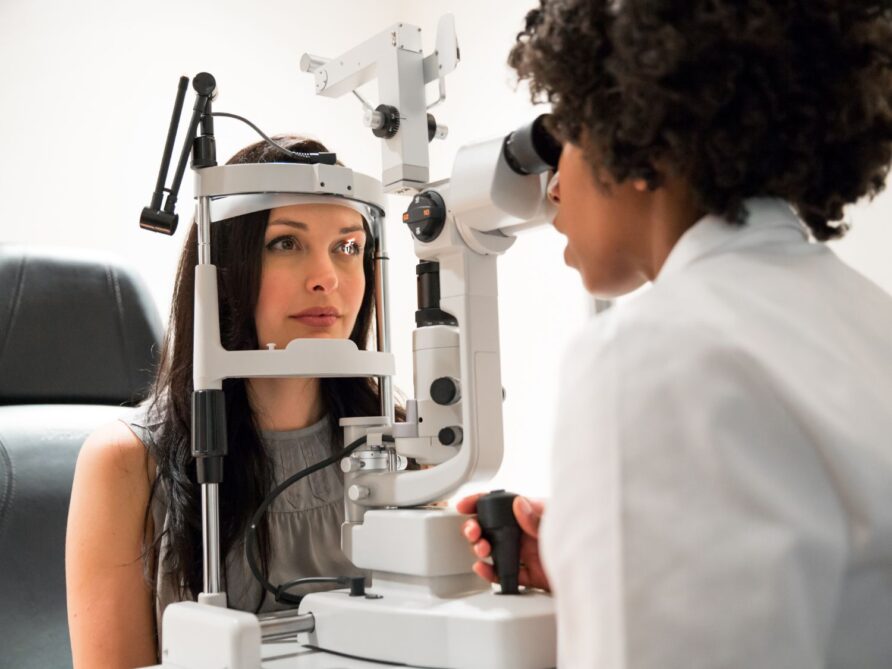
a woman looking at her medical chart held by her optometrist

How to Be Your Own Advocate

Listen, nobody knows your body better than you. Even the best doctors in the world might miss something if you don’t share with them what you’re experiencing and noticing.

Here’s how to be a strong advocate for your own eye health (and your own health in general):

Speak Up About Changes

Even if it appears small or silly, tell your eye doctor any differences you notice in your eyesight. Floaters, flashes, bluriness, shadowiness — anything. You’re not “being a pest.” That’s precisely their job: to listen and investigate.

Ask Specific Questions

Avoid leaving the appointment wishing you had asked something. In case you don’t know what to ask, you can even write down some questions ahead of time. Some suggestions:

– Is there anything unique about the health of my eyes today?

– Do you observe any changes associated with disease that I ought to be aware of?

– Are my symptoms something I must bring up to my usual doctor?

Connect the Dots

If you have existing medical conditions such as diabetes, hypertension, or autoimmune disease, inform your eye doctor. They’ll have to look out for certain signs more attentively.

And if your eye doctor notices something that’s worrying, don’t just say “keep an eye on it.” Ask: Do I need to see a specialist? Do I need to check in with my primary care doctor? Get clear next steps.

Trust Your Gut

If you’re not feeling something is right — either in regard to your vision or with respect to care that you are being given — listen to yourself. You may always get a second opinion. You are captain of your ship.

Conclusion: Your Eyes Tell a Larger Story. Tune In!

The next time you schedule an appointment for an eye exam, remember: it’s not about glasses or contacts. Your eyes are connected to all of you. Occasionally they’re the first place larger health issues leave their imprint.

Vision changes can be an early warning sign for diabetes, high blood pressure, neurological issues, and more. Even things you might think are no big deal — like blurry spots, flashes, or new floaters — can be important clues. If you notice something, say something. Your eye doctor can’t see from your point of view. Only you know what’s different.

And don’t stop there. If your optometrist does discover something during an exam, insist on answers. Call your primary care physician. Ask the tough questions. Insist on the tests if your instincts are screaming something is wrong.

You don’t have to be a medical expert to stand up for your own health. You simply need to be willing to say, “This doesn’t feel right,” and insist on answers when required.

If you read something from this piece, let it be this: your eyes aren’t a stand-alone system. They’re a part of the story your entire body is telling. Paying attention to them could save you an early catch — and that makes all the difference.

Require more plain-English information such as this? Bookmark Medi-Type or sign up to receive a notification when new posts are posted. I won’t spam you, I promise. Just plain old talk about how to take better care of yourself, one tiny step at a time.

— Marianne

5 Questions to Ask Your Eye Doctor at Your Next Exam

Why It’s Important to Ask Questions

There’s this thing that happens at almost every doctor’s appointment. You sit there, nod your head, and go home without really feeling like you know much more than when you arrived. It’s not your fault. Doctors talk fast. Clinics are busy. You’re trying to be a good sport, not hog their time. So you smile, grab the little prescription slip, and leave, still wondering what half of it meant.

I’ve been there too many times to count. Especially with eye appointments. The optometrist flips through those lenses on the big mask contraption and says, “Better here? Or here?” (Anyone else have the worst indecision during this test??) She rattles off a few terms like “optic nerve head” or “early presbyopia,” and before you know it, you’re thanking her and walking out. And somewhere between the parking lot and your living room, it hits you: Wait, was everything actually fine? Should I have asked something else?

Most people figure they’ll just wait until the next appointment to bring it up. Trouble is, that’s an expensive way of thinking. Eye diseases like glaucoma or macular degeneration don’t usually come with a big neon warning sign. They creep in slow. And by the time you notice something’s really wrong, the damage can be permanent.

Alright, we’ve got the bad news behind us.

The good news is you don’t need a medical degree to take proactive care of your eyesight. You just need to know how to ask better questions. And yeah, it might feel a little awkward at first to raise your hand like you’re back in third grade. But if asking a few extra questions today means catching something early, it’s worth it ten times over.

Doctors actually appreciate it when patients speak up. Trust me, after transcribing thousands of medical notes, I can tell you: the patients who ask good questions usually get more thoughtful answers. When you show that you’re paying attention and you care about the details, it encourages your doctor to slow down a little and explain things more clearly. As they say, the squeaky wheel gets the grease. 

And nobody knows your body better than you do. If something feels different, off, or just plain strange, you have every right to ask about it.

Here’s another thing: your eye exam is your time. You’re paying for it. You took time out of your day to be there. You deserve to walk away with the answers you need about your health.

So, when you’re sitting in that chair and you feel that old, familiar urge to just nod and get out fast, take a breath. Pull out the little note you made ahead of time. Speak up. Your future self will be glad you did.

In the next sections, I’ll walk you through five specific questions you can bring with you to your next eye appointment. These questions can make a difference in the way you care for your eyes going forward.

Question 1: “What’s My Risk for Eye Diseases Like Glaucoma, Macular Degeneration, or Cataracts?”

Too many people think that if they can still read road signs and thread a needle, then their eyes are fine. That may not necessarily be the case, however. A lot of the most severe eye disease creeps on unawares, with no obvious symptoms until the damage is done. Glaucoma, for instance, can steal your peripheral vision over time without you even noticing. Macular degeneration can blur your central vision over years. Cataracts can insidiously creep in so slowly that you don’t even realize how much you are adapting until you see how clear everything is after surgery.

That’s why it’s so important to ask about your personal risk. Your doctor knows more than what they can find on the chart. They know your medical history, habits, family history, and age. They can spot early warning signals you are not even aware of. If you are at higher risk for particular conditions, they might recommend earlier or more frequent screenings, or even small lifestyle modifications that can save your vision for the long run.

Straight talk: few people mention it because they do not want to hear the worst. But not asking is not necessarily choosing trouble. It only means you’re giving yourself an even break for catching things in the early stages when it is still worthwhile.

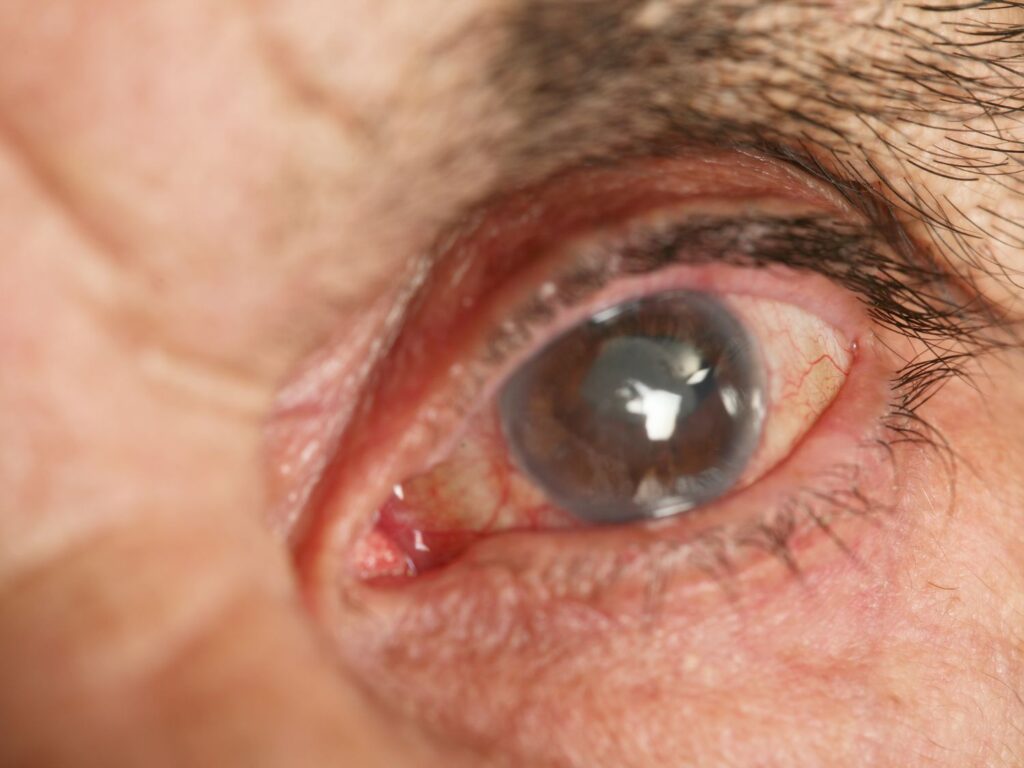
an up close picture of an irritated eye

Question 2: Are the Changes in My Vision Normal for My Age?

Here’s something you might not know: aging alters your eyes just as it alters your knees or your back. Certain shifts in vision are just part of the ride. Presbyopia, for example, happens to almost everyone after a while. That’s when suddenly small print is hard to read up close. It’s not a disease. It’s just the lens of the eye hardening with age, so it is harder to focus on something up close.

Not all changes are explained by “growing older,” however. Sudden bluriness, loss of field of vision, wavy lines in your visual field, lots of new floaters — those are signs of more serious disorders that should be treated. Your doctor should help you sort out the normal from the not-so-normal.

This question does double duty. One, it allows your physician to come clean with you about what will happen as you age. Two, it allows them to mark down anything that doesn’t conform to the normal trend, which may protect you from overlooking warning signs early on.

Fast tip: it is useful to write down any new symptoms you experience, no matter how insignificant they might be. Bring that list along. Sometimes the small things make the biggest picture when you collate them.

Question 3: Are There Any Lifestyle Changes I Should Consider to Protect My Eyes?

Most individuals expect to walk out of an eye exam with a new glasses prescription, maybe a contact lens recommendation, and that’s all. What your doctor does not always explain (unless you ask) is how much your everyday habits can enhance or harm your vision in the future.

Small things like diet, exercise, time in front of screens, and use of sunglasses can all make a big difference. And if you smoke, for example, your risk of macular degeneration and cataracts goes through the roof. Constantly sitting in front of computers or phones without taking a break will wreak havoc on your eyes and could lead to bigger problems down the road. And sunglasses when you’re out? That’s not all about being cool. It’s about safeguarding your eyes from UV damage that accumulates year after year.

When you ask this question, you’re opening yourself up to guidance that goes far beyond corrective lenses. A good eye doctor should be able to tell you whether there is something you can change in your daily life that can assist in keeping your eyes healthy. Maybe it’s just better lighting in your home workspace. Maybe it’s introducing more greens or omega-3s into meals. Or maybe it’s even something as simple as taking short hourly breaks to look away from computers if you are a computer professional.

You don’t have to turn your world around tomorrow. But a bunch of small changes, compiled over time, can keep eyes a whole lot healthier in the long run.

Question 4: Is This Change Normal for My Age?

Here’s a question that not many people ask — and it’s a great one. Because not all little changes are indicators that something terrible is happening. Sometimes, it’s just the deal that comes with getting older. Other times, it’s a sign that you need to pay more attention (pun entirely intended).

Your doctor can fix that for you, but only if you say something. If your near vision is starting to get a little blurry, or you’re noticing a whole lot more floaters than you used to, it might be perfectly normal for your age group. It might be something like presbyopia, which sounds scary but is just the fact that your eyes are getting a little stiff and it takes more effort to focus up close. Happens to nearly everybody sooner or later.

But if something is not right — like one eye aging more quickly than the other, or flashes of light — that is not “normal aging.” That is something which needs to be explored.

Asking this question makes it easier to stop worrying about the harmless stuff and to focus on the things that might need action. Plus, you’ll walk out of the appointment with a clearer idea of what to expect five or ten years down the line, instead of feeling like you’re waiting for the next surprise to hit.

a woman squinting through eyeglasses

Question 5: Is There Anything I Should Be Watching Out for Before My Next Appointment?

This is a sleeper hit. It might sound silly, but it really gives you an edge when it comes to taking care of your eyesight between appointments.

Most people believe that if something major was wrong, the physician would have noticed it. And indeed, many things arise in a routine eye test. But there are diseases — like glaucoma, retinal detachment, or diabetic retinopathy — that become increasingly worse between check-ups every year without much obvious warning sign.

By inquiring about this, you inform your doctor that you’re open to doing something. It gives them the chance to warn you of minor changes to notice, like temporary blurry spots, flashes, new floaters, or even the slightest variation in peripheral vision.

It’s a smart method for catching issues before they become tougher (and costlier) to repair. And it also obviates the “Was I overreacting?” worry. If something does change, you’ll know you’re not imagining it, and you’ll know it’s worth coming in for an earlier visit.

You don’t have to become a card-carrying hypochondriac. You’re just getting yourself caught up on your own health — and that’s where you should be.

Print This Prior to Your Upcoming Eye Exam

Bring this list along with you and keep it handy when you meet with your eye doctor. It is easy to become frazzled or forgetful of what you wanted to inquire about once seated in the chair.

Questions to Ask:

☐ Are there any signs of eye disease at an early stage that I need to be aware of?

– Inquire regarding conditions common to your age, health, and family history.

☐ Are there any lifestyle changes I can make to protect my vision?

– Like quitting smoking, diet modification, eye protection at work, or increased use of sunglasses.

☐ How often should I come in for exams based on my current level of eye health?

– If you’re at higher risk for issues, you might need more than a yearly visit.

☐ Is this change in vision normal for my age?

– Get real discussion about what’s aging and what might require more attention.

☐ Are there warning signs that I should watch out for between the time I have now and the time of my next appointment?

– What it’s okay to pay attention to, and when it would be a reason to call the office sooner.

Extra Notes Section:

(Leave some space for people to write down whatever something their doctor says, like:

  • “Watch for new floaters.”
  • “Return sooner if headaches happen more often.”
  • “Start to wear blue light glasses at work.”

Quick Tips:

  • Don’t be shy. No question is “dumb.”
  • If something isn’t making sense, make the doctor define it in English.
  • Take a break. Physicians are used to explaining things to you — that’s what they do.
  • If you tend to forget instructions verbalized to you, ask them to put something in writing or send a summary by email.

Final Thoughts: Why These Questions Matter

A visit to the eye doctor shouldn’t be like a pop quiz where you sit there nodding along, hoping you pass. It should be like a real conversation — one where you leave knowing a little more about your eyes, your health, and what’s next.

It’s not about challenging your doctor or being a “difficult patient.” It’s about getting the information you need to take better care of yourself. You’re paying for their expertise. You deserve clear answers, not medical jargon or a two-minute rush out the door.

I’ve seen too many people, myself included, leave appointments with a prescription in hand but no idea what just happened. A few smart questions can change that. It makes the whole thing less stressful, and way more useful.

Next time you’re sitting there with the eye chart and the air puff machine, pull out your list. Take a deep breath. Ask what you came in to ask. Your future self will thank you.

Thanks for reading — and if you found this helpful, go ahead and pass it along to someone who’s got an eye exam on the horizon. They’ll thank you.